Please find below contact details and contact us today! Our experts always ready to help you.

Please find below contact details and contact us today! Our experts always ready to help you.

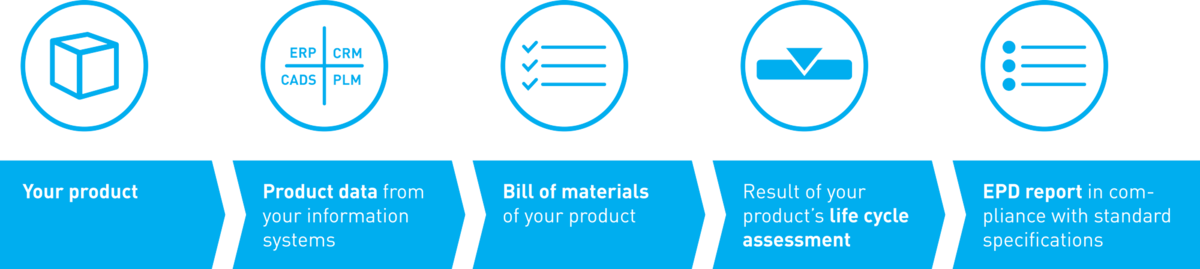
Identify the entity responsible for the EPD, analyze the product type, and assist clients in identifying or developing applicable Product Category Rules (PCRs). PCRs form the basis for preparing EPDs and ensure that consistent assessment criteria are applied to products within the same category.
Based on the ISO 14040 and ISO 14044 standards, we conduct full life cycle modeling and data collection for products to quantify their environmental impacts at every stage, from raw material extraction and production to transportation and end-of-life disposal. We ensure that all data sources are authentic and traceable, giving priority to actual factory measurement data.
Based on relevant PCR and LCA results, a comprehensive Environmental Product Declaration (EPD) report will be prepared in accordance with ISO 14025 and EN 15804 (applicable to construction products) to fully present the product’s environmental performance.
We commission a qualified third-party verification body to independently verify the EPD report, ensuring the scientific rigor, accuracy, and credibility of the claims.
Assist clients in registering and formally publishing their reports on the target EPD platform, ensuring that their EPD claims are recognized in international markets.
Q1: What types of products are eligible for an EPD?
EPDs apply to nearly all types of products and services, and are currently most commonly used for building materials, construction products, and components.
Q2: How long does it take to prepare an EPD?
The project timeline varies depending on the complexity of the product and the status of data preparation. Generally speaking, it typically takes several months from project initiation to the publication of the registration report.
Q3: Does an EPD have an expiration date?
EPD reports are typically valid for five years. If there are significant changes to the product’s manufacturing process or raw materials during this period, the report must be updated promptly. It is also recommended to perform annual maintenance to ensure the EPD remains valid on the official platform.