Please find below contact details and contact us today! Our experts always ready to help you.

Please find below contact details and contact us today! Our experts always ready to help you.
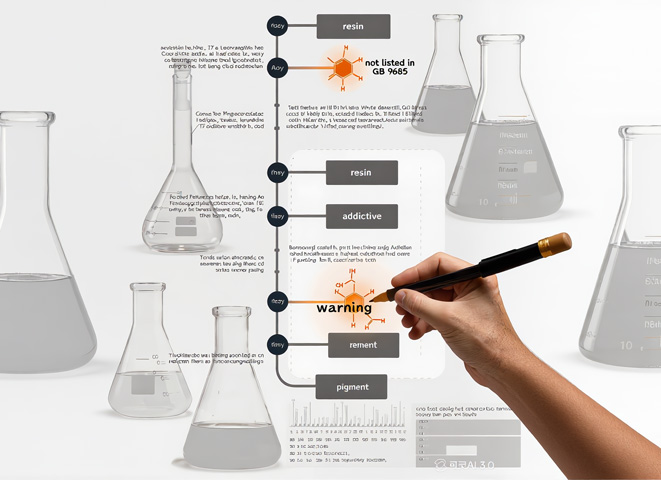
By getting involved at the R&D or incoming materials stage, we verify whether the resins, additives, colorants, and other ingredients used in product formulations are included in the positive list specified in GB 9685 and related announcements, and assess their usage restrictions (such as Specific Migration Limits (SML) and Total Specific Migration Limits (SML(T))). This approach eliminates prohibited substances at the source and mitigates the risk of exceeding permissible limits.
In accordance with the general safety requirements of GB 4806.1, we assist companies in preparing and reviewing declarations of conformity, and in establishing a fully traceable technical dossier covering “product—raw materials—additives—supplier declarations.” We ensure that the content of the DoC is complete, logically consistent, and capable of withstanding scrutiny during market supervision spot checks.
In accordance with the new labeling regulations, please review your product labels, compliance statements, and accompanying instructions to ensure that information regarding materials, conditions of use, microwave safety, maximum operating temperature, production dates, and responsible parties is complete, accurate, and conforms to standard terminology. This will help you avoid penalties resulting from improper labeling.
Based on the anticipated most severe usage conditions for the product (food type, contact temperature and duration, and contact area-to-volume ratio), we design the most representative migration test protocols in accordance with the GB 31604.1 and GB 4806 series standards. This approach avoids waste caused by excessive testing while preventing compliance gaps resulting from overly lenient test conditions.
Conduct compliance audits, review test reports, and perform risk assessments on packaging and contact components supplied by multi-tier suppliers, and issue supplier compliance assessment reports. Assist companies in establishing supplier onboarding and dynamic monitoring mechanisms to intercept non-compliant materials at the supply chain level.
In the event of failed random inspections, excessive migration levels, or labeling complaints, our team of experts will promptly step in to identify the root cause, propose a phased corrective action plan and validation strategy, and provide technical documentation to support communications with regulatory authorities as needed, helping to resolve compliance issues.
When a product is sold simultaneously in China and the EU, we conduct an in-depth comparison of China’s GB standards with EU regulations such as (EC) No 1935/2004 and (EU) No 10/2011 to identify the highest standard among the overlapping requirements. We then design a testing plan that provides compliance evidence for both domestic and international markets, significantly reducing testing costs.

As the “framework standard” for food contact materials, GB 4806.1 establishes general safety requirements for various materials and articles, including basic requirements, principles of conformity, testing methods, and product information and traceability.
Notably, in August 2025, the National Health Commission released a draft for public comment on the latest version of this standard. It clarifies safety assessment requirements for non-intentionally added substances (NIAS) and provides detailed compliance pathways for multi-material composites, composite materials, and coated products. In the future, this standard will replace both the current GB 4806.1-2016 and GB 4806.13-2023 standards. This revision signals a comprehensive upgrade to the general safety requirements.
The GB 4806 series covers virtually all materials: plastics (GB 4806.7), paper and paperboard (GB 4806.8), metals (GB 4806.9), coatings (GB 4806.10), rubber (GB 4806.11), bamboo and wood (GB 4806.12), inks (GB 4806.14), adhesives (GB 4806.15), and even the latest standalone standard for silicone rubber products introduced in 2025 (GB 4806.16). Each material has its own specific migration limits and compliance requirements.
GB 9685, “Standards for the Use of Additives in Food Contact Materials and Articles,” employs a positive list system to clearly specify restrictions such as the permitted scope of use, maximum levels, and specific migration limits (SMLs) for additives, monomers, and polymerization aids in various materials.
This series of nearly 70 standards serves as the core technical foundation for the closed-loop compliance system, covering everything from “General Requirements for Migration Testing” to precise methods for determining the migration levels and residue levels of hundreds of specific substances. The intensive updates to numerous method standards between 2025 and 2026 have further enhanced the scope and accuracy of testing.
